Venous Leak: Causes, Symptoms, Diagnosis, and Treatment (Complete Guide)
DCVenous Leak, also known as venogenic erectile dysfunction, is a medical condition in which a man is unable to maintain an erection due to improper blood retention in the penis.
Venous Leak, also known as venogenic erectile dysfunction, is a medical condition in which a man is unable to maintain an erection due to improper blood retention in the penis. While many people associate erectile dysfunction (ED) with poor blood inflow, venous leak involves the opposite problem—blood enters the penis but cannot stay trapped long enough to sustain an erection.
This condition can significantly affect a man’s confidence, relationships, and overall quality of life. Fortunately, with modern medical advancements, venous leak can be diagnosed accurately and treated effectively in many cases.
Understanding Normal Erectile Function
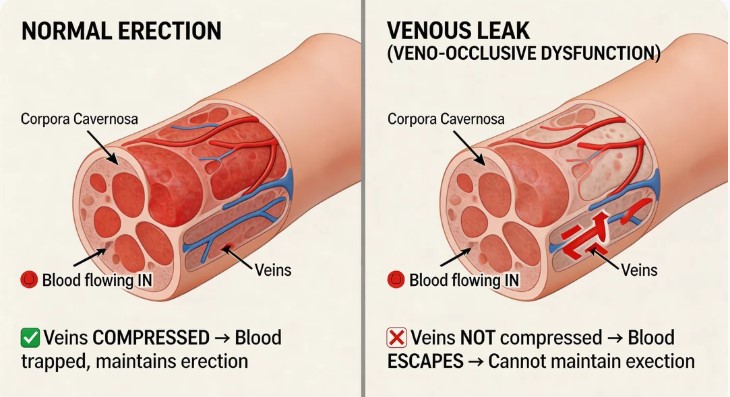
To understand penile venous leak, it’s important to first know how a normal erection works.
An erection involves three key steps:
Blood Flow Increases: Sexual stimulation causes arteries in the penis to dilate, allowing more blood to flow in.
Expansion of Erectile Tissue: The corpora cavernosa (spongy tissue) fills with blood.
Venous Compression: Veins that normally drain blood are compressed, trapping blood inside and maintaining the erection.
In venous leak, the third step fails. The veins do not close properly, causing blood to leak out, leading to difficulty maintaining firmness.
What is Venous Leak?
Venous leak is a form of erectile dysfunction where the veins in the penis cannot adequately trap blood. Even if arousal and blood inflow are normal, the erection cannot be sustained because blood escapes too quickly.
This condition is often misunderstood and may be misdiagnosed as general ED, leading to ineffective treatments.
Causes of Venous Leak
Venous leak can result from several physical and psychological factors. Some of the most common causes include:
1. Structural Abnormalities
Damage or weakness in the tunica albuginea (the fibrous covering of the penis) can prevent proper compression of veins.
2. Aging
As men age, tissues lose elasticity, making it harder for veins to function correctly.
3. Injury or Trauma
Pelvic injuries, penile trauma, or surgery can disrupt normal vascular mechanisms.
4. Chronic Diseases
Conditions such as:
Diabetes
Hypertension
Cardiovascular disease
can damage blood vessels and contribute to venous leakage.
5. Hormonal Imbalances
Low testosterone levels may indirectly affect erectile function.
6. Psychological Factors
Although venous leak is primarily physical, stress, anxiety, and depression can worsen symptoms.
Symptoms of Venous Leak
Men with venous leak may experience:
Difficulty maintaining an erection
Erections that are not firm enough for intercourse
Loss of erection shortly after penetration
Normal libido but poor performance
Better erections during sleep than during sexual activity (in some cases)
It’s important to note that symptoms may vary depending on severity.
Diagnosis of Venous Leak
Proper diagnosis is crucial because standard ED treatments may not work if venous leak is the underlying cause.
1. Medical History and Physical Examination
Doctors assess lifestyle, medical conditions, and sexual history.
2. Penile Doppler Ultrasound
This is the most common diagnostic test. It evaluates blood flow in and out of the penis.
3. Dynamic Infusion Cavernosometry and Cavernosography (DICC)
A specialized test to measure venous leakage and visualize veins.
4. Nocturnal Penile Tumescence (NPT) Test
Checks whether erections occur during sleep.
Treatment Options for Venous Leak
Treatment depends on severity, underlying causes, and patient preference.
1. Lifestyle Modifications
Improving overall health can enhance erectile function:
Regular exercise
Healthy diet
Quitting smoking
Reducing alcohol intake
Managing stress
While lifestyle changes alone may not cure venous leak, they can improve outcomes.
2. Oral Medications
Drugs like:
Sildenafil (Viagra)
Tadalafil (Cialis)
help increase blood inflow but may not be very effective in venous leak cases because the issue lies in blood retention.
3. Vacuum Erection Devices (VED)
These devices create negative pressure to draw blood into the penis and use a constriction ring to maintain the erection.
Advantages:
Non-invasive
Effective for many patients
Disadvantages:
Temporary solution
May feel unnatural
4. Injection Therapy
Medications such as alprostadil are injected directly into the penis to enhance blood flow and improve rigidity.
Pros:
Strong erections
Quick results
Cons:
Requires training
Risk of pain or priapism
5. Venous Surgery
Surgical ligation aims to block leaking veins.
Effectiveness:
Mixed results
Not commonly recommended due to recurrence rates
6. Penile Implants
For severe cases, penile prosthesis implantation is considered the most reliable treatment.
Types:
Inflatable implants
Semi-rigid rods
Benefits:
High satisfaction rate
Permanent solution
Risks:
Surgical complications
Infection (rare)
7. Regenerative Therapies (Emerging Treatments)
Modern approaches include:
Platelet-Rich Plasma (PRP) therapy
Stem cell therapy
These treatments aim to repair damaged tissues, though more research is needed.
Psychological Impact of Venous Leak
Venous leak doesn’t just affect physical health—it can also impact mental and emotional well-being.
Men may experience:
Performance anxiety
Depression
Low self-esteem
Relationship issues
Counseling or therapy can be highly beneficial alongside medical treatment.
Prevention Tips
While not all cases can be prevented, certain habits reduce risk:
Maintain a healthy weight
Control blood sugar and blood pressure
Stay physically active
Avoid smoking
Get regular medical checkups
When to See a Doctor
You should consult a healthcare professional if:
Erectile problems persist for more than a few weeks
Erections are consistently weak or short-lived
There is a history of injury or chronic illness
Early diagnosis improves treatment success.
Myths and Misconceptions
Myth 1: It’s Just Psychological
Reality: Venous leak is primarily a physical condition.
Myth 2: Pills Always Work
Reality: Many men with venous leak do not respond well to oral medications.
Myth 3: It Only Affects Older Men
Reality: Younger men can also develop venous leak, especially after injury or due to vascular issues.
Living with Venous Leak
Managing venous leak requires a combination of:
Medical treatment
Healthy lifestyle
Emotional support
Open communication with a partner is also essential for maintaining a healthy relationship.
Future Outlook
Medical science is continuously evolving, offering new hope for men with venous leak. Advanced imaging, minimally invasive treatments, and regenerative therapies are improving outcomes and quality of life.
Conclusion
Venous Leak is a complex but treatable condition that affects a man’s ability to maintain an erection due to improper blood retention. While it can be frustrating and emotionally challenging, a wide range of diagnostic tools and treatment options are available.
Early intervention, proper diagnosis, and a personalized treatment plan are key to successful management. If you or someone you know is experiencing symptoms, seeking medical advice is the first step toward recovery and improved quality of life.