Fee applies
Bird Watching
Death Valley National Park
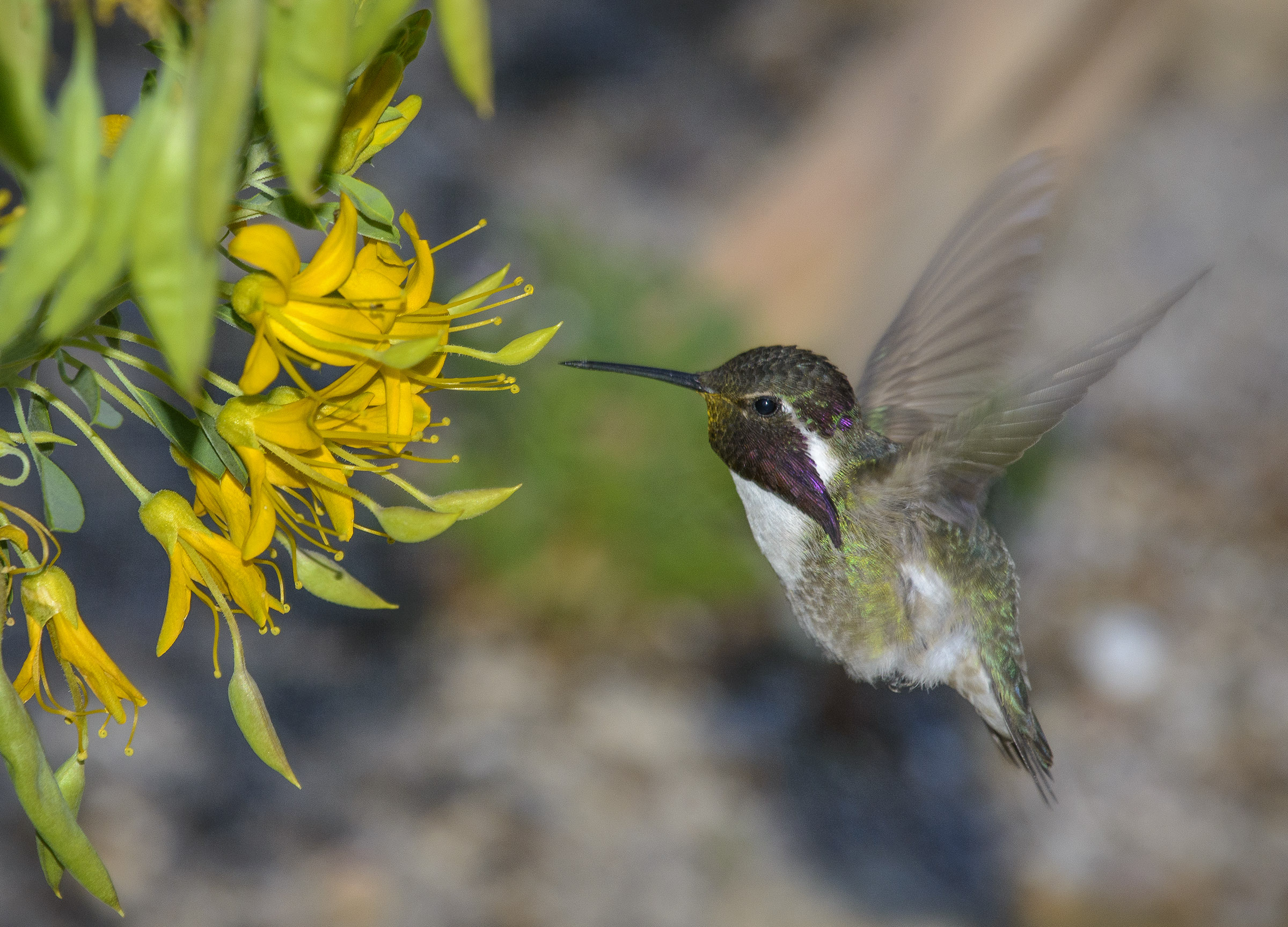
Roadrunners and ravens and hummingbirds- oh my! With many resident and migratory species, bird watching opportunities abound in Death Valley.
Death Valley is a birder's paradise due to the sheer number of species which can be spotted in the park. One of the largest contributers to this diversity is the huge range of elevations and associated habitats present (over 11,000 ft/ 3353 m). From the creosote-studded sands of Mesquite Flat Sand Dunes, to the riparian oasis at Darwin Falls, to the bristlecone forest crowning Telescope Peak, many habitat types mean many bird species which call Death Valley home. In addition to year-round residents such as ravens and roadrunners, Death Valley's water sources are also a vital resource for migratory birds, many of which can be spotted in the spring and fall. Spring Migration For a few weeks in the spring, hundreds of species pass through desert areas. The first of the northbound spring migrants can be seen as early as the beginning of March, with migration fully ramping up by mid-March to early April. The first wave of warblers reaches the valley about mid-April. The northbound movement reaches its peak from late April to early May. Nesting Nesting occurs from mid-February (during warm springs) at lower elevations, through July at higher elevations. May through June is the most productive nesting period. Fall Migration There is definite evidence that the fall migration is underway by early August. Southbound movements are at a peak near the end of September. However, it is sometimes difficult to differentiate between northbound and southbound movements. Late spring migrants may still be moving north as early fall migrants begin their southward journeys. There is also the post-nesting summering visitors which may be mistaken for early southbound migrants. Winter November through March is probably the poorest season for birding; a few permanent residents remain, as well as occasional Sierran visitors. The majority of the park's avifauna can be found at the low mountain springs and desert oases. Furnace Creek Ranch, with its diversity of habitats is a hot spot. Springs occuring up to approximatley 4,000 feet (1,219 m) elevation are also common wintering habitats. Where to look for birds Visiting the following areas provides an overview of the diversity of Death Valley habitat and avian species: Saratoga Spring (60 ft. elevation)– a low desert oasis. Furnace Creek Ranch (-200 ft. elev.) – multiple lush habitats; visit the bird viewing platform next to Airport Road. Note: please do not enter the golf course unless golfing. Scotty’s Castle (3,000 ft. elev.) – riparian habitat. (currently closed due to flooding) Wildrose (4,000 ft. elev.) – riparian habitat. High Panamints: Charcoal Kilns to the top of Telescope Peak (elevations from 7,000 – 11,000 ft)– this challenging drive / hike passes through pinyon-juniper habitat to bristlecone pine communities (recommended during clear / non-snow conditions only). Use this Death Valley bird list to keep track of species you observe.
Tags
BirdwatchingBirdsDeath Valley National ParkBird Watchingmigrationbird migrationbirdwatching
Visitor Photos
No visitor photos yet
Details
Fees
Fee covered by general park entry fee.
Fees Apply
Yes
Seasons
Winter, Spring, Summer, Fall
Time of Day
Day, Dawn, Dusk
Accessibility
Many prime birdwatching spots can be accessed from paved parking areas. Speak with a ranger about the accessibility of the location you plan on visiting.
Pets
Yes
Reservations
No