1-6 Hours
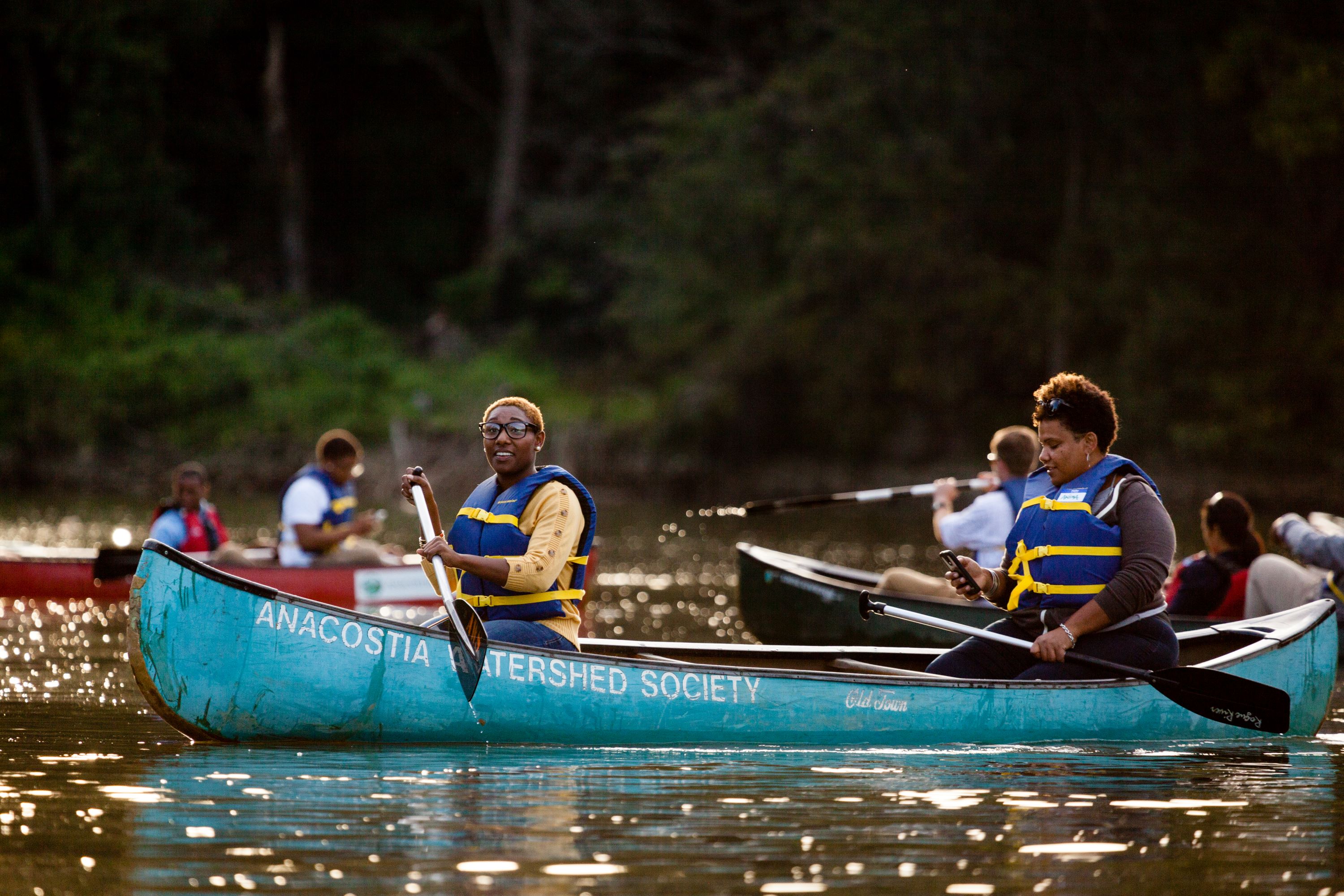
Paddle the Anacostia Water Trail
Anacostia Park
Discover the natural abundance of the Anacostia River as it threads through the heart of Washington, DC. Watch birds on Kingman Island or dock at the National Arboretum and roam the forest. The Anacostia River corridor has lots of options for outdoor fun and the Anacostia Water Trail can help you find them.
Trail Overview The Anacostia Water Trail covers a nine-mile stretch of the Anacostia River, running from Bladensburg, Maryland, through Washington, DC, to its juncture with the Potomac River about two miles south of Capitol Hill. Along this trail, the character of the river varies remarkably. Upstream you’ll find forests, wetlands, and wildlife that seem amazingly removed from the city. Downstream are hubs of riverfront recreation, with community parks, restaurants, and sporting events. The trail is managed by the Anacostia Watershed Association. Public boat lanches are located at several points along the trail, including at the north end of Anacostia Park (off of Anacostia Drive SE, and at Bladensburg Waterfront Park (4601 Annapolis Rd, Bladensburg, MD 20710). Learn more about the trail. History Indigenous People of America People lived on the banks of the Anacostia as early as 9,500 B.C.E. During the 17th century, the Indigenous towns recorded by Captain John Smith at the intersection of the Anacostia and the Potomac Rivers were Namoraughquend, Assaomeck, and Namassingakent. These towns were located just below the Potomac’s Great Falls. Every spring, people gathered at the river's edge, eagerly awaiting the return of migratory fish from the Chesapeake Bay. The town of Nacotchtank was the largest in the area, and its location at the conflux of the two rivers and in the transition from upland to tidewater made it a major crossroads for travel and trading between distant tribes. Nacotchtank was inhabited by the Nacotchtank people, who are also known as the Anacostans – the origin of the name Anacostia we use today. This area is part of the ancestral homeland of the Piscataway people. Their descendants still live here, same as members of the Piscataway Conoy Tribe & Sub-Tribes, the Piscataway Nation, and other Tribal organizations. War of 1812 The Battle of Bladensburg on August 24, 1814, ended in defeat for the United States and allowed the British to invade Washington, D.C. Once the Americans realized the British route of advance, there was little time to prepare. They hastily established lines of defense near the port town of Bladensburg, where the British would cross the Eastern Branch of the Potomac (known today as the Anacostia). The poorly trained and ill-equipped American militia, though superior in number, were no match for the seasoned British army. That night, as buildings in Washington burned and the victors ravaged the White House, news of the rout at Bladensburg spread throughout the countryside.
Tags
PaddlingRiver and RiparianWater TrailsWar of 1812paddlekayakChesapeake BayCaptain John Smith Chesapeake National Historic TrailStar-Spangled Bannerstar-spangled banner national historic trailwater trailanacostia parkAnacostia
Visitor Photos
No visitor photos yet
Details
Duration
1-6 Hours
Fees Apply
No
Time of Day
Day, Dawn, Dusk
Accessibility
An accessible kayak launch can be found at Bladensburg Waterfront Park (4601 Annapolis Rd, Bladensburg, MD 20710).
Pets
Yes
Reservations
No