Fee applies
Fishing in Biscayne National Park
Biscayne National Park
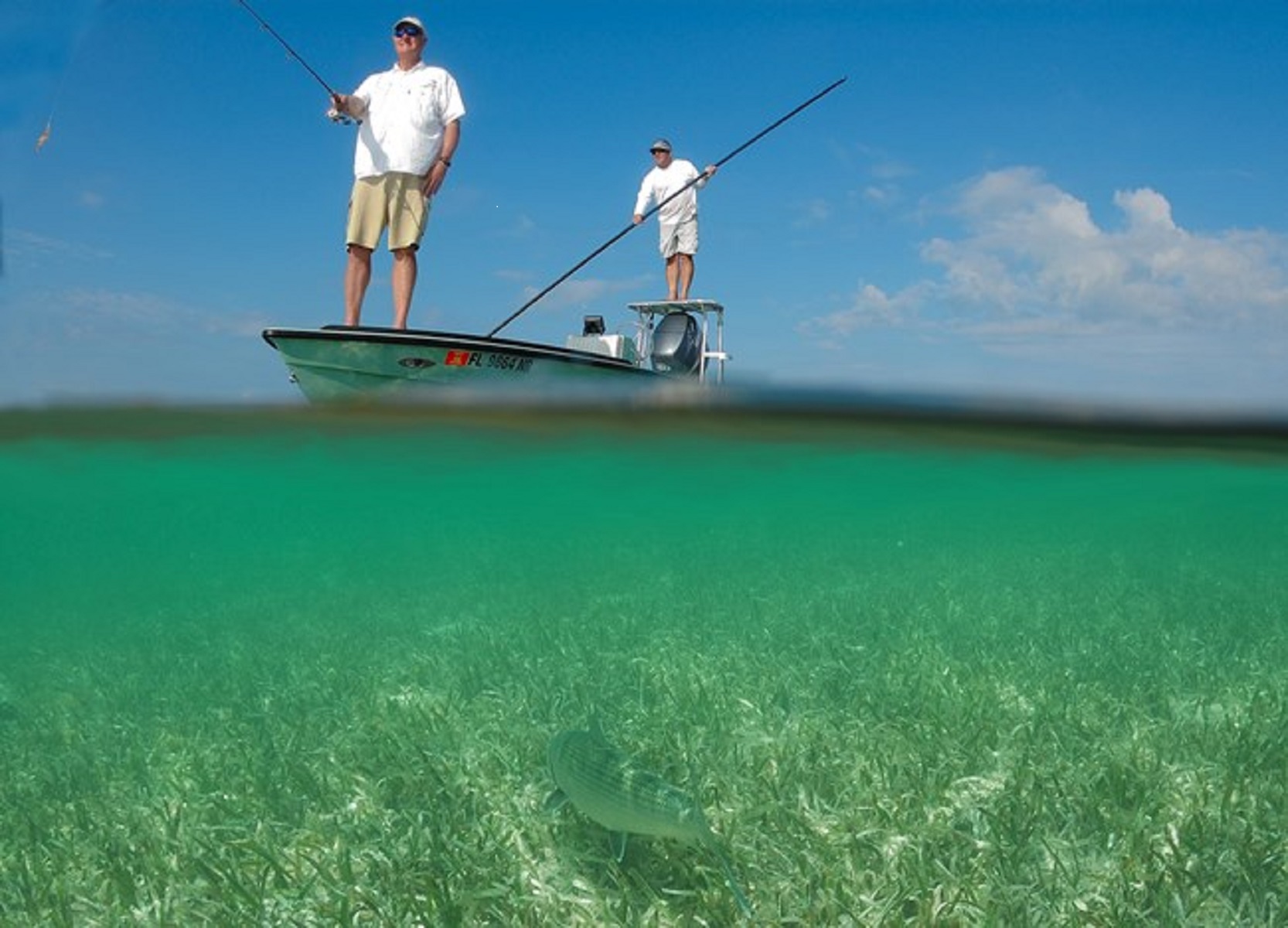
Biscayne National Park preserves unique marine habitat and nursery environments that sustain diverse native fishery resources and support world-class fishing for spiny lobster, snapper, grouper, tarpon and bonefish.
For thousands of years, people have fished the waters of Biscayne Bay. For ancient peoples like the Tequesta, it was a way of life. Today, we enjoy fishing as a way to relax and appreciate the outdoors. We want you, and those who come after you, to have a pleasant time fishing in the park. Before casting a line or diving down into the water, please take some time to learn the rules and regulations of fishing in the park. Biscayne National Park allows fishing as a means of providing for public enjoyment, and customary and traditional use. Fishing regulations within Biscayne National Park are set by the Florida Fish and Wildlife Conservation Commission (FWC) and the park works with FWC to ensure that fishing activity is regulated in a manner that avoids unacceptable impacts to park resources. Licenses With limited exceptions, a valid Florida fishing license is required to fish in the park. Children under 16 years of age do not require a license. Visitors fishing within Biscayne National Park must follow the fishing license requirements in accordance with the laws and regulations of the FWC. Those who do not qualify for a fishing license exemption as listed here can learn more about purchasing a license by visiting the FWC website. Please note that if you are engaging in shore-based shark fishing, reef-fishing from a private vessel, or specifically targeting snook, spiny lobster, or tarpon, additional permits/tags are required. Fishing Regulations Unless otherwise provided for, fishing regulations apply to all finfish found in both fresh and saltwater, and mollusks and crustaceans found in saltwater (shellfish). These fishing regulations apply, regardless of land ownership, on all lands and waters within the park that are under the legislative jurisdiction of the United States. Fishing shall be in accordance with the laws and regulations of the State of Florida (36CFR2.3(a)) except as provided below. Where there is a conflict between a state regulation and a federal (NPS) regulation, the state regulation is superseded by the federal regulation. For state fishing regulations specific to Biscayne National Park, please visit the Florida Fish and Wildlife Conservation Commission website. Note that size regulations and bag limits for many species are more stringent within the park boundaries than for areas outside the park. For more information on how NPS fishing regulations work, go to the regulations page on the NPS Fish and Fishing website. The following regulations apply throughout all of Biscayne National Park: No person shall harvest any tropical ornamental marine life species or any tropical ornamental marine plant within Biscayne National Park, unless such person possesses a valid collecting permit issued by the superintendent of the park. Prohibited species also include: Goliath Grouper, Nassau Grouper, Queen Conch, Sawfish, sea turtles, stony and fire corals, sea fans, Longspine Urchin, Bahama Starfish, and numerous species of sharks. For the full list, see see Florida saltwater fishing regulations. The following regulations apply to specific locations within Biscayne National Park: For the protection of artifacts, anchoring any vessel within the Legare Anchorage (the area bounded by latitude 25°30 N and 25°29 N and longitude 80°08 W and 80°07 W) is prohibited at any time except in the case of an emergency. However, hook and line "drift" fishing is allowed. Fishing in the following waters is prohibited: Within the area marked by buoys at the mouth of Boca Chita Key Harbor as well as within the harbor Within the area marked by buoys at the mouth of Elliott Key Harbor as well as within the harbor. The only exception is that fishing from the maintenance dock just south of the main harbor is permitted. The National Park Service boat basin at Park Headquarters at Convoy Point The entrance/main road at Convoy Point The northern side of Adams Key dock On the northern end of the Convoy Point picnic area adjacent to the boardwalk, just east of the canoe ramp/launch area Cast netting (also called a throw net) is prohibited at Convoy Point along the Convoy Point Jetty and foot bridge. The taking of lobster is prohibited in the Biscayne Bay/Card Sound Lobster Sanctuary including all natural, artificial and tidal creeks between the islands and along the mainland. Legally taken lobsters may be transported through the sanctuary. A map of the sanctuary can be accessed here. The taking of lobster is prohibited in the five Coral Reef Protection Areas, as shown on the map here (click on “Coral Reef Protection Areas”). The corners of these five rectangular areas will be marked with yellow buoys. No traps may be deployed in the Trap-Free zone adjacent to the Visitor Center, as shown on the map here (Click on “BNP Headquarters trap-free zone”). Trawls may not be operated in either of the No-Trawl zones, as shown on the map here (Click on “No Trawl Zones”). The harvest of blue land crabs is prohibited at Convoy Point.
Tags
Saltwater FishingFishOceansfishingsaltwater fishing
Visitor Photos
No visitor photos yet
Details
Fees
Fishing regulations within Biscayne National Park are set by the Florida Fish and Wildlife Conservation Commission (FWC). With limited exceptions, a valid Florida fishing license must be purchased to fish in the park. Visitors fishing within Biscayne National Park must follow the fishing license requirements in accordance with the laws and regulations of the FWC. Learn more about purchasing a license by visiting the FWC website. Children under 16 years of age do not require a license.
Fees Apply
Yes
Accessibility
Fishing is permitted from the jetty bridge at Convoy Point which is wheelchair accessible.
Pets
Yes
Reservations
No