Overview
About Tallgrass Prairie National Preserve.
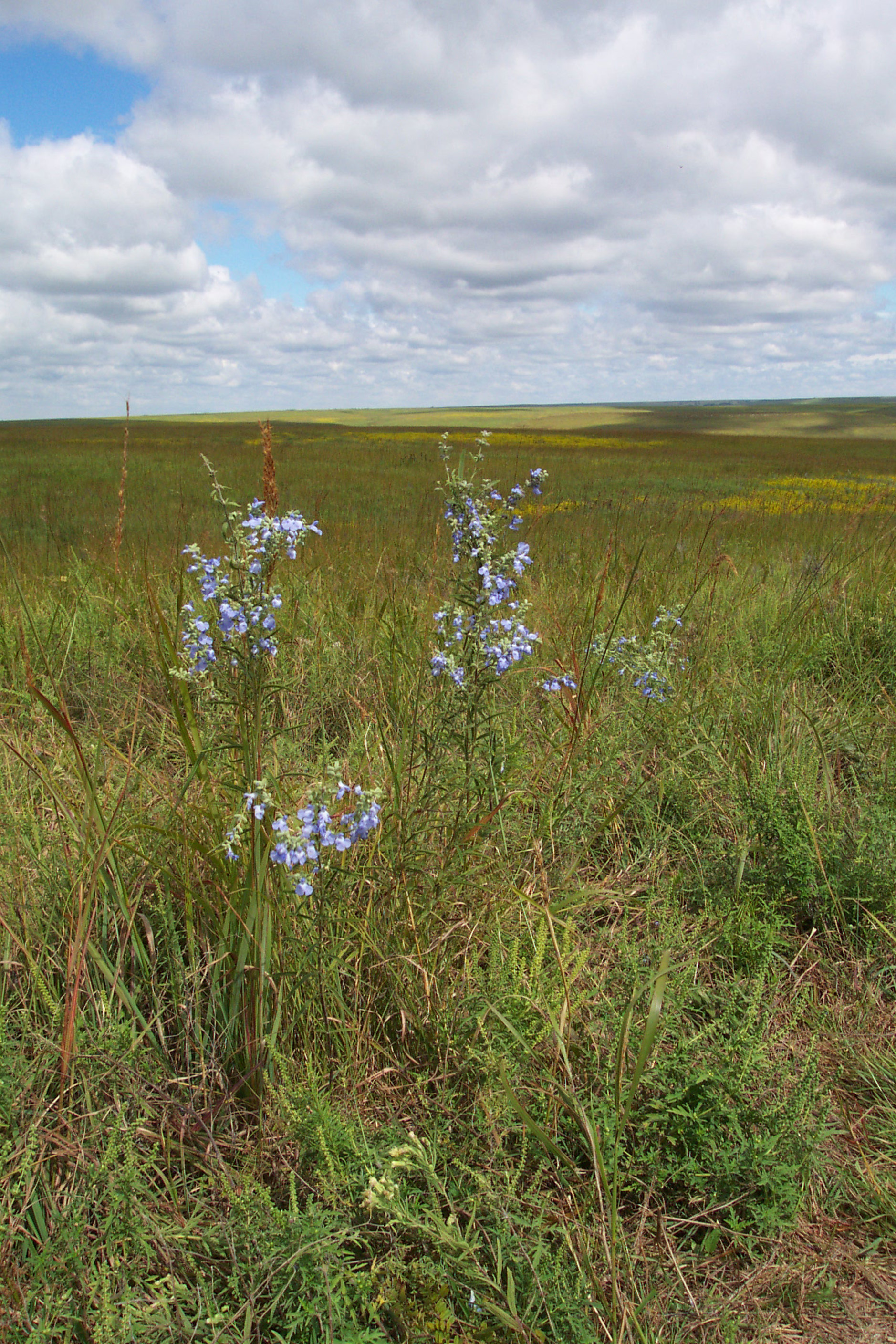
Tallgrass prairie once covered 170 million acres of North America, but within a generation most of it had been transformed into farms, cities, and towns. Today less than 4% remains intact, mostly in the Kansas Flint Hills. Established on November 12, 1996, the preserve protects a nationally significant remnant of the once vast tallgrass prairie ecosystem. Here the tallgrass makes its last stand.
Arts and CultureCultural DemonstrationsAstronomyStargazingFishingFreshwater FishingFoodPicnickingGuided ToursSelf-Guided Tours - WalkingHands-OnHiking
Weather
Typical weather for the preserve ranges from lows of 0 degrees in the winter and highs of 90 + degrees in the summer. Prevailing prairie winds attribute to winter blizzards and occasional summer storms. Thunderstorms that form on the Great Plains have a rare chance of producing tornadoes. Lightning poses a danger when hiking into the prairie. Please check current weather conditions at NOAA before hiking into the preserve.
Gallery
Photos of Tallgrass Prairie National Preserve.
5 images
Things to do
Discover Tallgrass Prairie National Preserve.
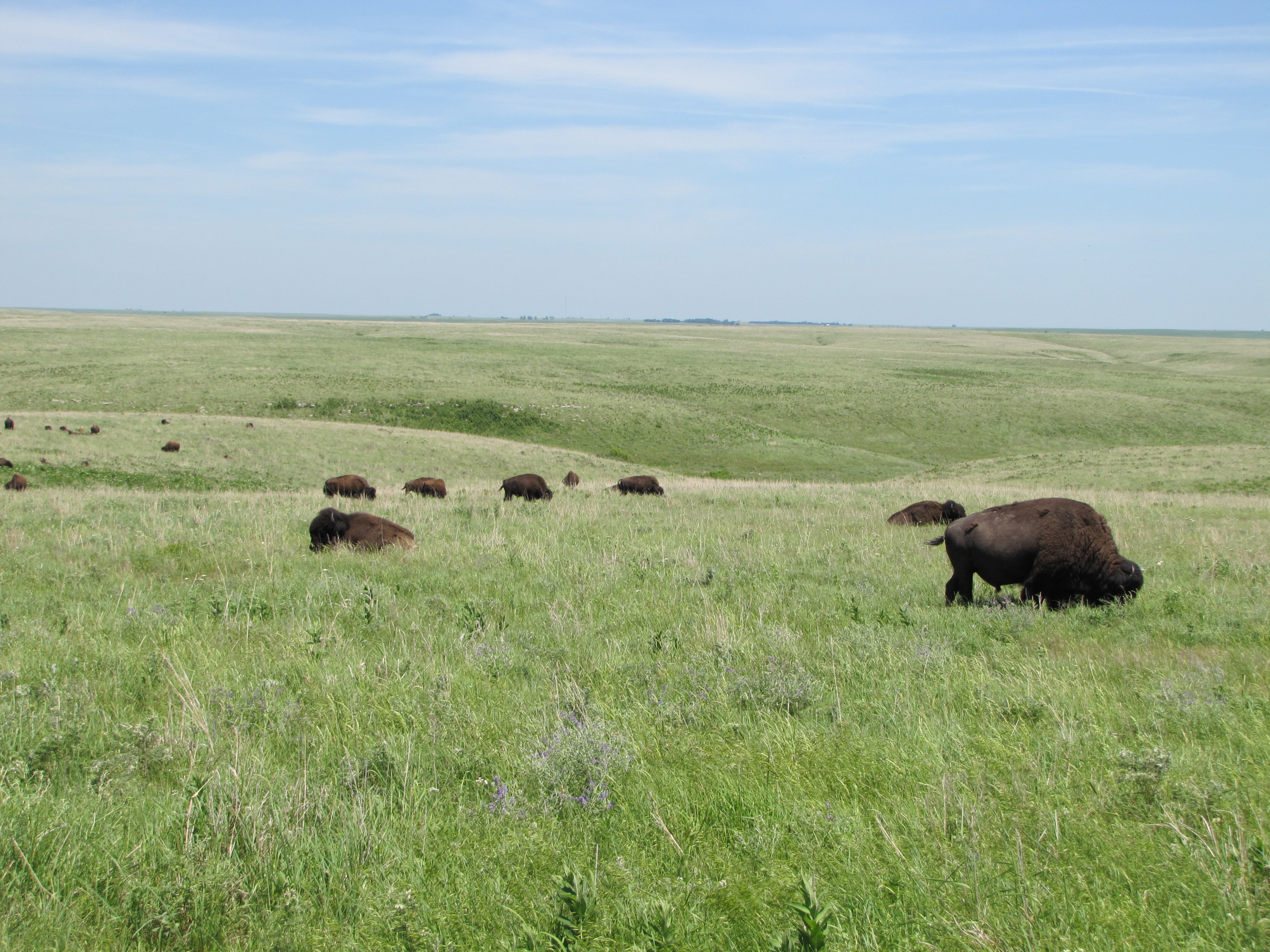
Bison viewing on the Scenic Overlook Trail
30-180 MinutesWalk along the gravel trail into the unplowed Flint Hills. Here an array of prairie wildlife make their home. The trail winds uphill through Windmill Pasture where a bison herd grazes. It continues to a hilltop on the far side. Several trail options allow extended backcountry hikes or alternate routes when bison block the path. The visitor center to the overlook is just over 3 miles (5 km) one-way.
Learn more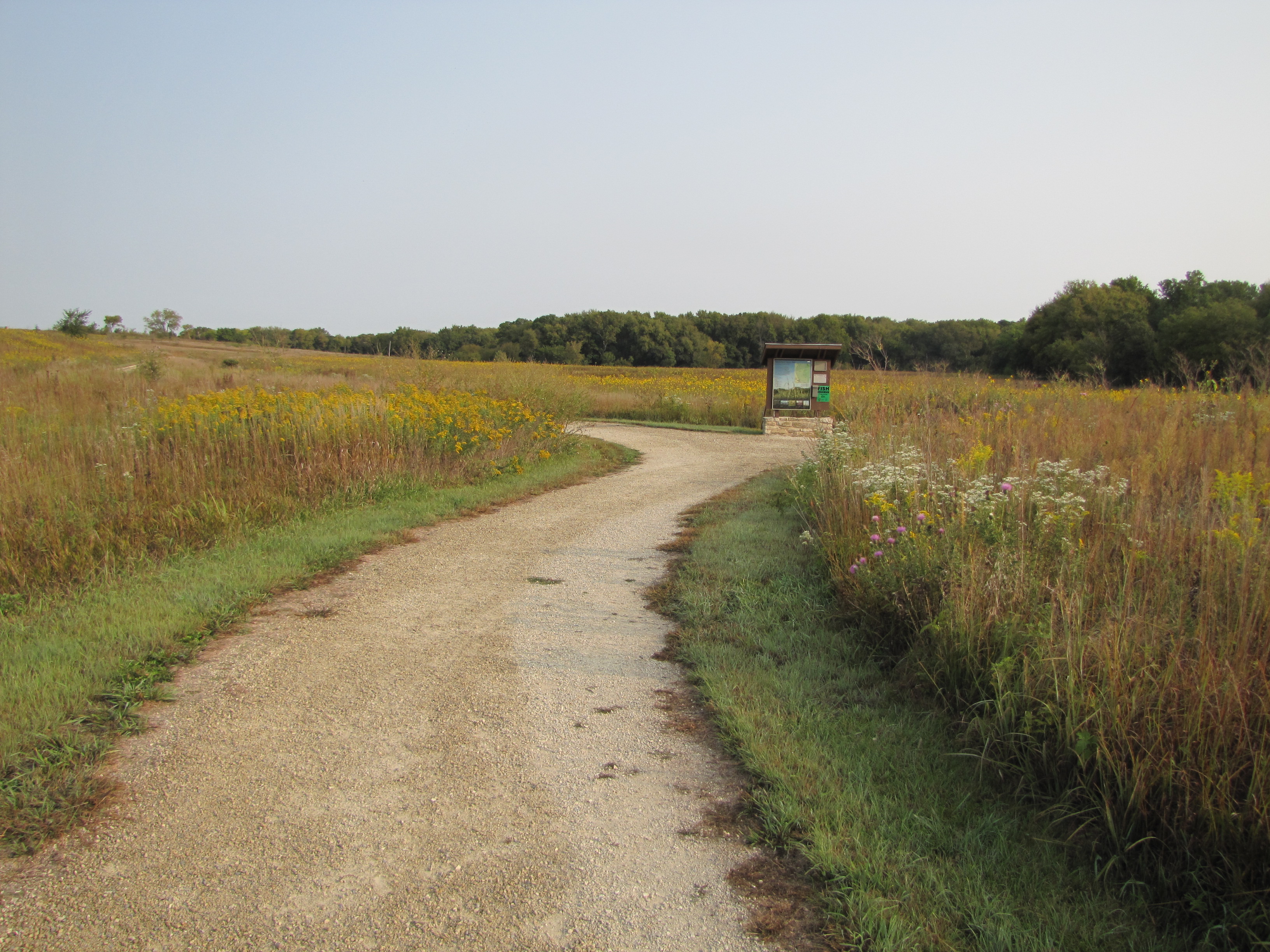
Break on the Bottomland Trail
10-120 MinutesThe Bottomland Trail offers many amenities and a short walk through the prairie. It's an ideal stop for passing through with a tight schedule. The fine gravel trail loops through a small meadow by the river.
Learn more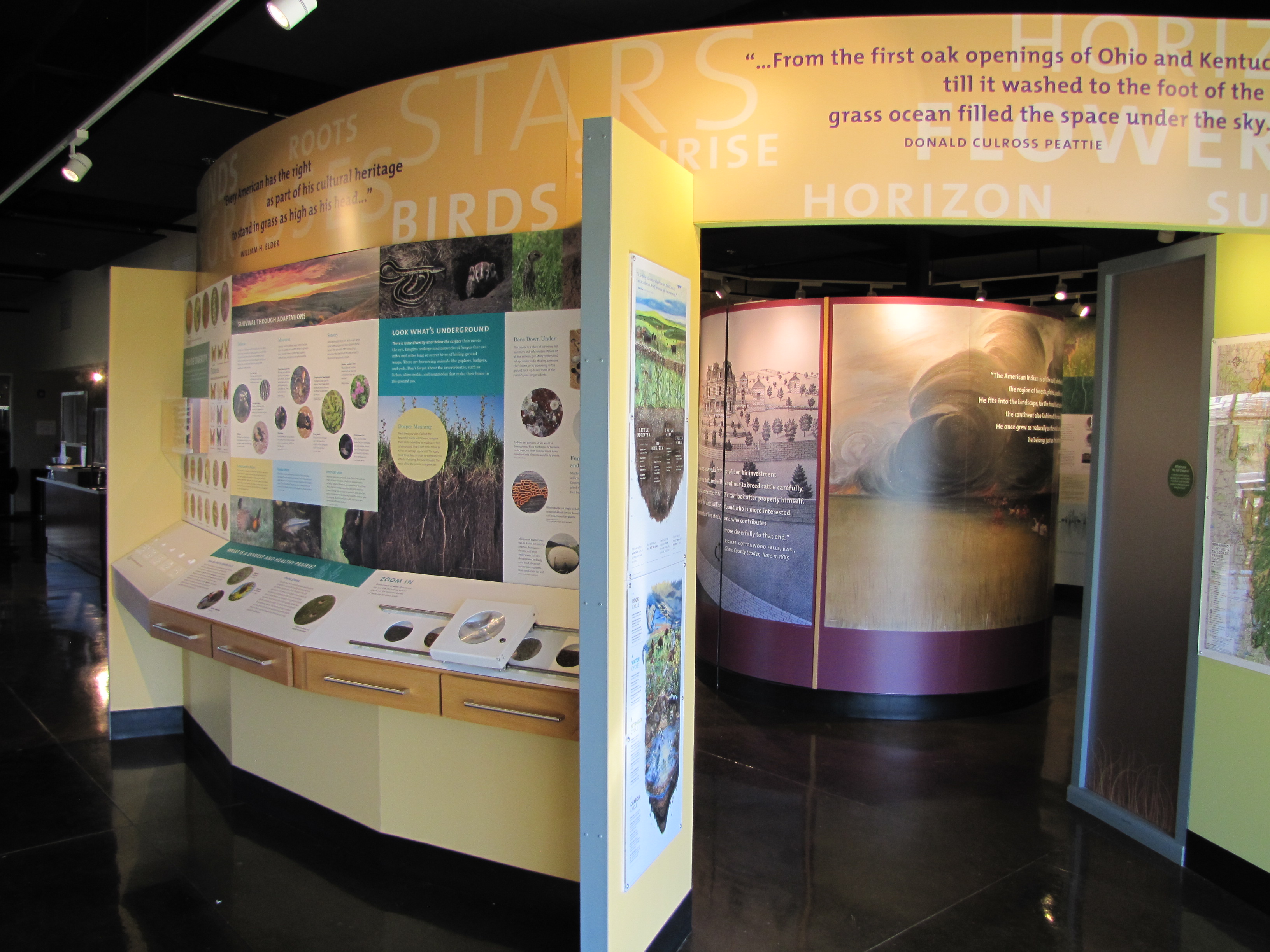
Explore Tallgrass Visitor Center
10-30 MinutesPark rangers attend the visitor center with a range of exhibits. Geology, ecology, history, and culture all shaped today's Tallgrass Prairie. A modest gift shop provides souvenirs and the park stamp for collecting memories. Junior Ranger books, event posts, trail maps, and brochures constantly draw visitors.
Learn more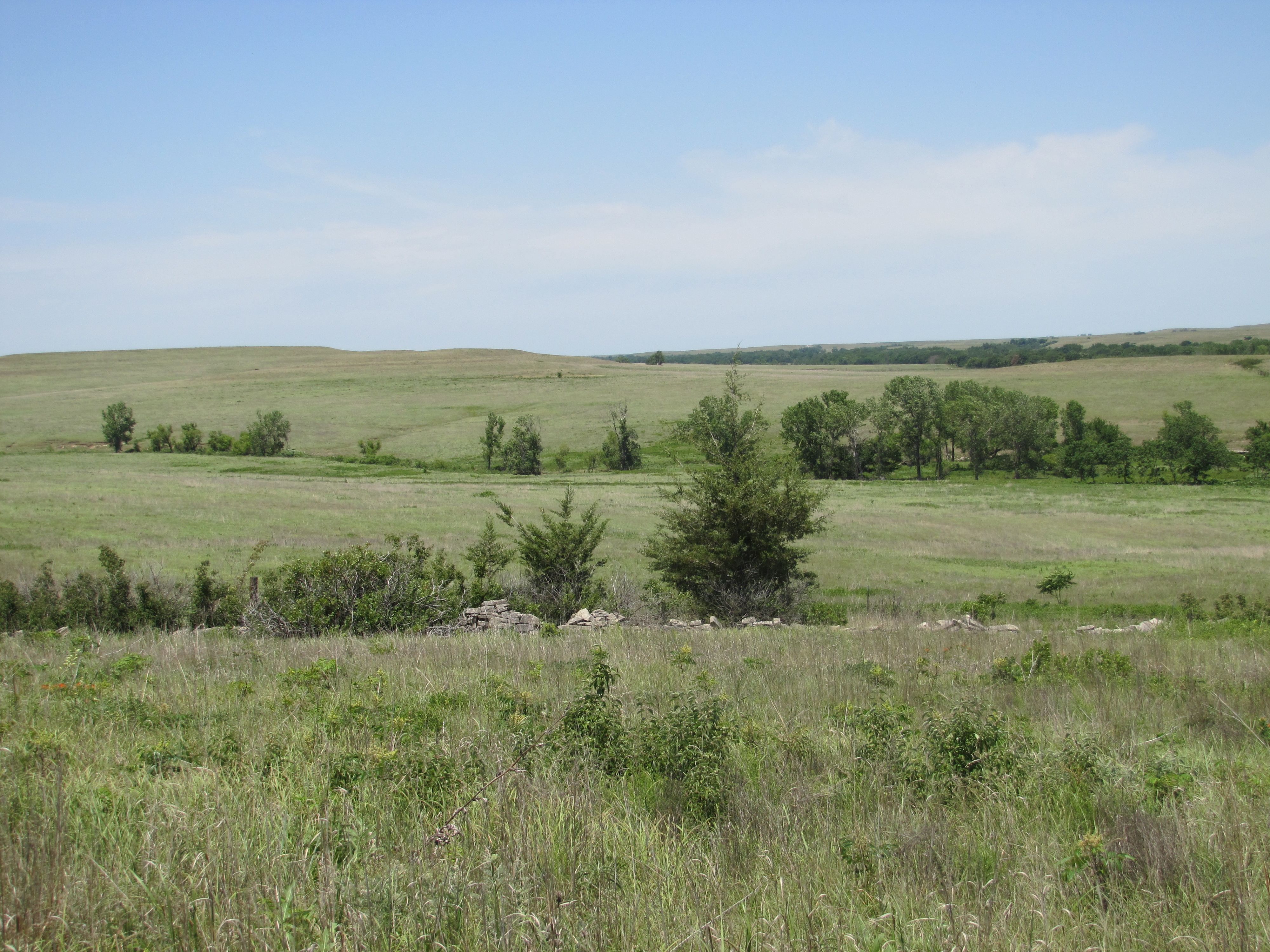
Nature Trails
45 MinutesThree nature trails (shorter in length) allow visitors to experience the tallgrass prairie first-hand, while remaining in closer proximity to visitor services. These trails are dog friendly, but please help all visitors enjoy them by keeping dogs on a visible 6' maximum leash and picking up after your pet. Enjoy your hike by following these important safety rules. Permits are not required to hike the trails. All trails open 24 hours; no camping.
Learn more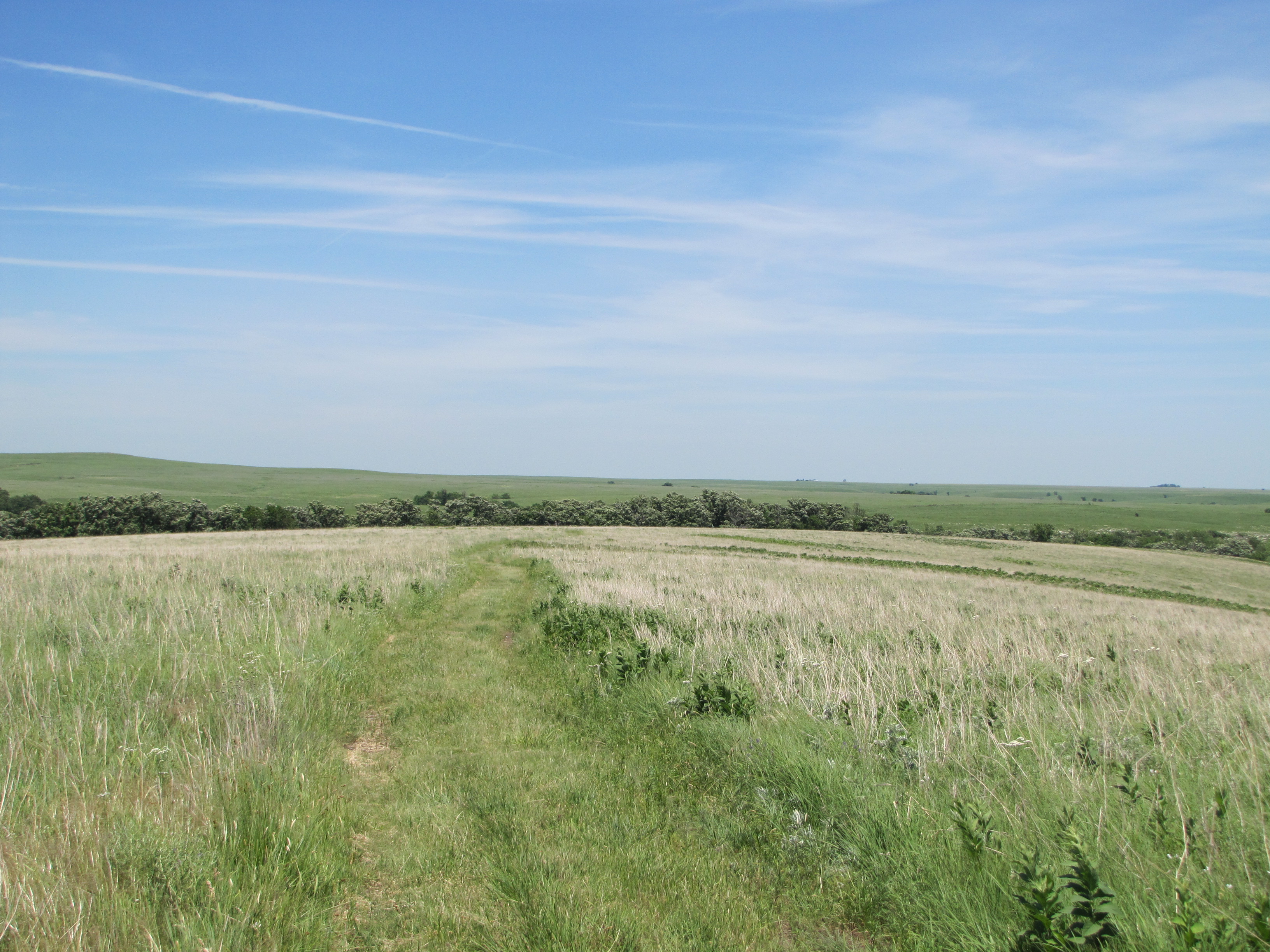
Take 12 to West Branch
4-12 HoursUp for a full day hike? Set out for marker 27 on the north end of the preserve. This 12 mile rounder provides a grand view of the landscape, bison, and who knows what else. Learn more about backcountry hiking.
Learn more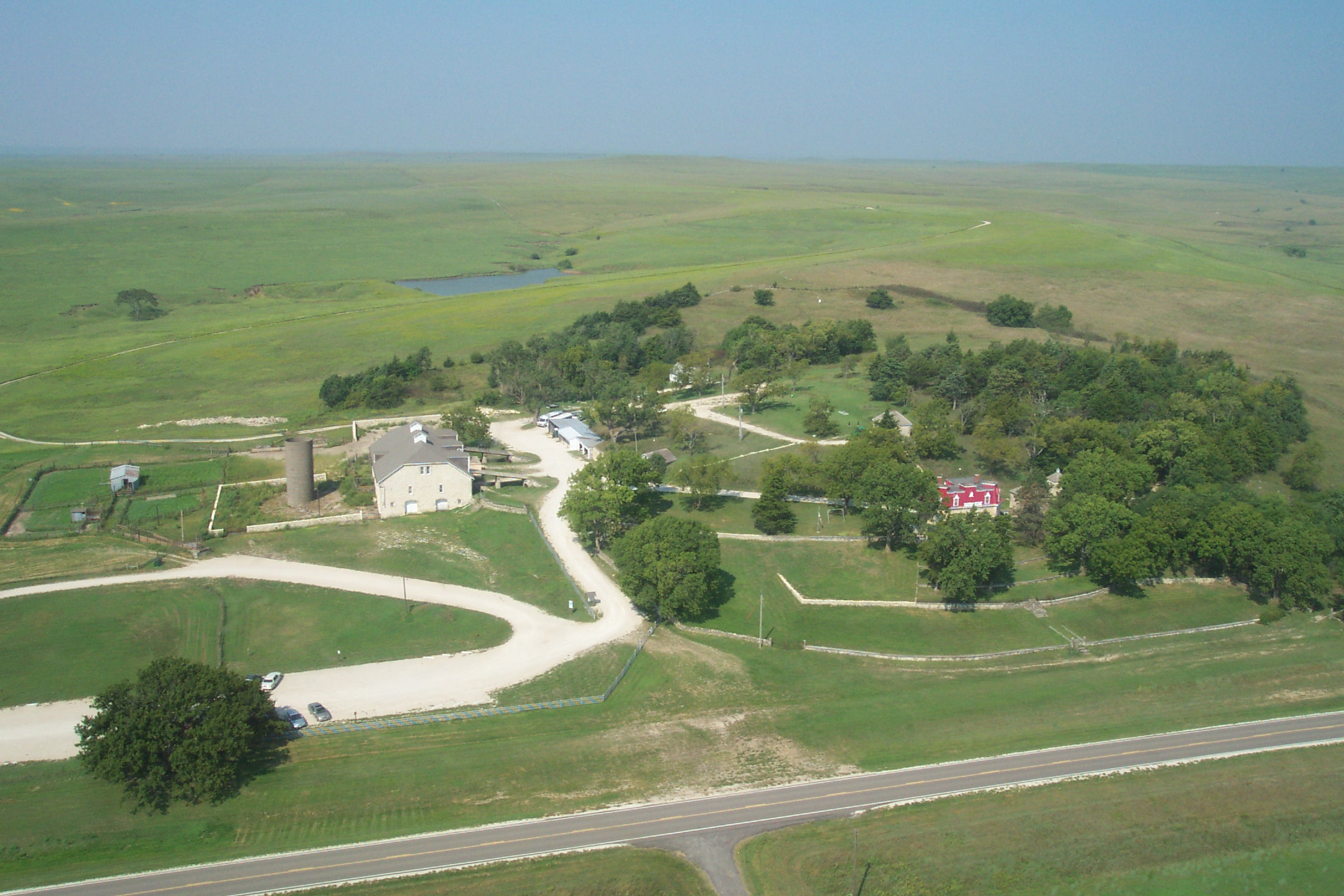
Take a Self-Guiding Tour of the Ranch
60 MinutesStephen F. Jones named his ranch the Spring Hill Farm and Stock Ranch for the springs found on the hill west of the house. The house was built on a hillside with a two-story exposure on the upper side and a three story on the lower level. The three-level limestone barn measures 60 feet by 110 feet and is built into the hillside. It originally was roofed with 5,000 pounds of tin and sported a very large double-header windmill. Other outbuildings make up the ranch complex.
Learn more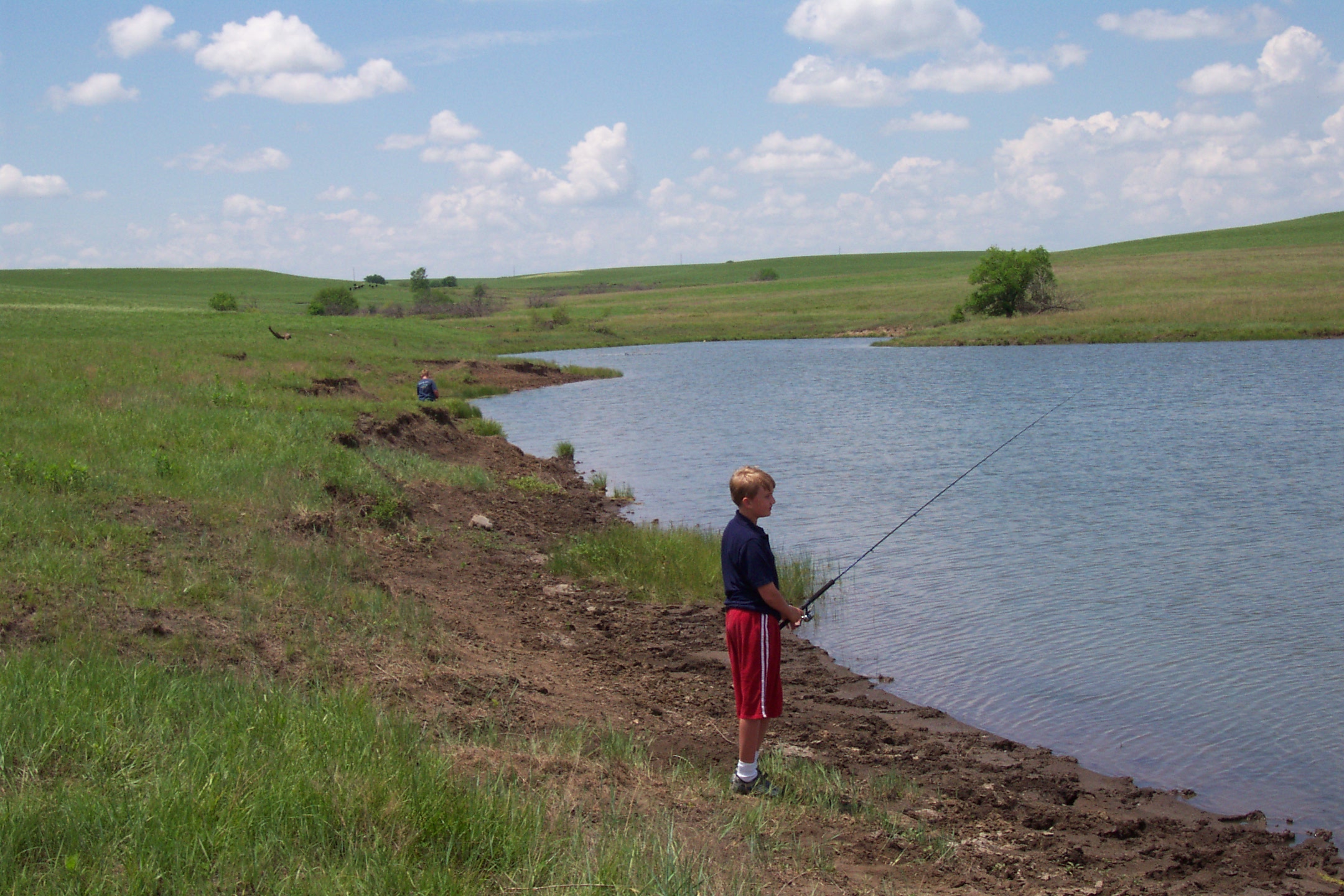
Try Catch and Release Fishing
Three preserve ponds and Fox Creek are open to the public for catch and release fishing under the Kansas Department of Wildlife, Park and Tourism's Fishing Impoundments and Stream Habitats (F.I.S.H.) program. The fishing program is available year-round.
Learn moreNo reviews yet. Be the first to share your experience!
Know a great spot near Tallgrass Prairie National Preserve?
Help visitors discover the best local businesses near Tallgrass Prairie National Preserve. List your business on Poyst and reach thousands of travelers.
- ✓Free business listing with photos & reviews
- ✓Appear in destination & city guides
- ✓Analytics dashboard to track visibility