20-120 MinutesNo fee.
Explore L'Hermitage
Monocacy National Battlefield
Explore the late 18th century slave plantation known as L'Hermitage.
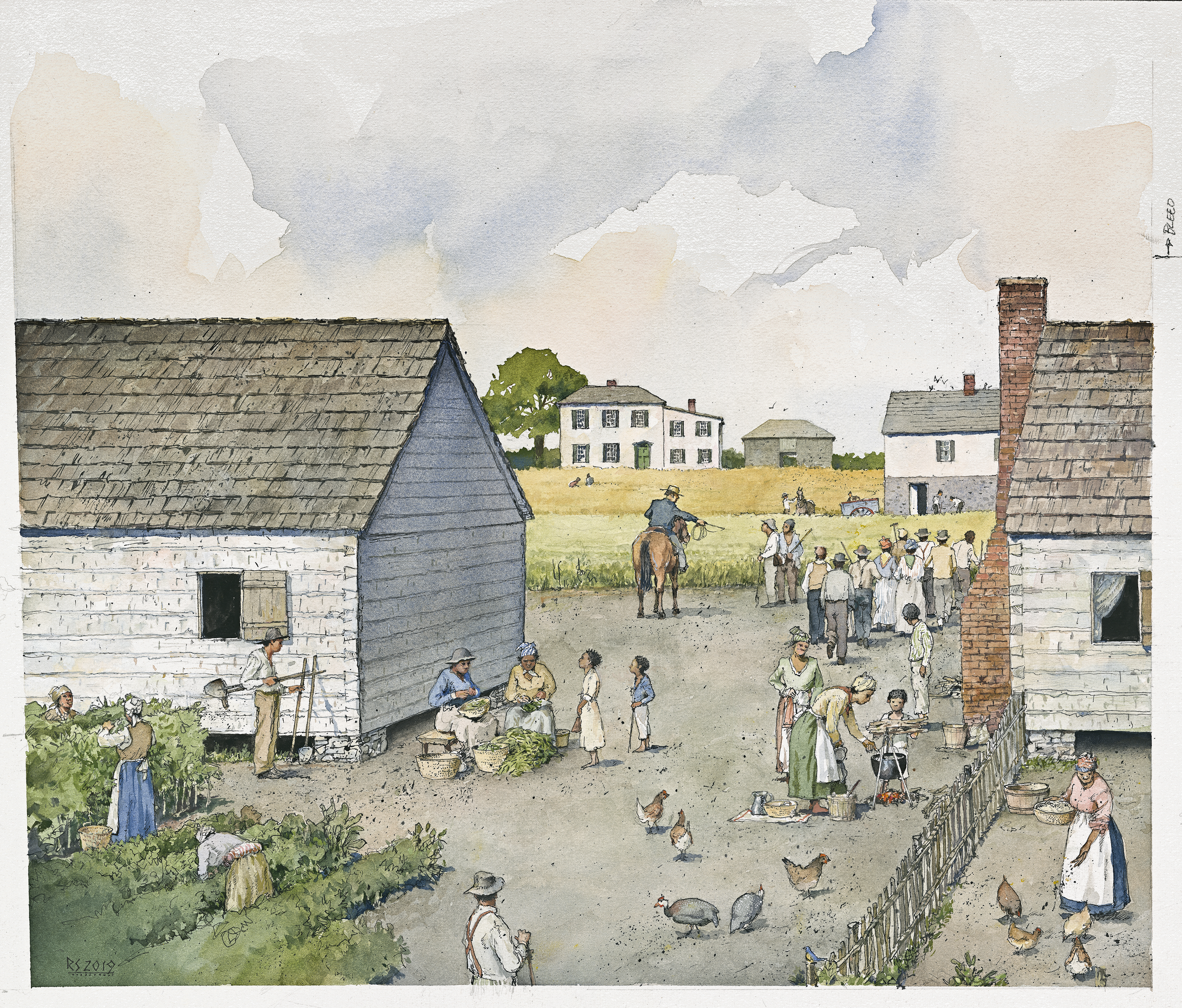
Explore the site of the second largest slave plantation in Frederick County, Maryland. Beginning in 1794 and 1795, the Vincendières, a French planter family from the colony of Saint-Domingue (Haiti), began acquiring lands that would one day comprise a 748-acre plantation that they called L'Hermitage. Like many French refugees, the Vincendières came to the United States in 1793 to escape civil unrest associated with the French Revolution and with the slave uprisings that began in Saint-Domingue in 1791. Today's Best Farm consists of the southern 274 acres of the original 748-acre L'Hermitage plantation. The Vincendières brought twelve enslaved people of African descent with them from Saint-Domingue - the maximum legal limit. By 1800, Victoire Vincendière was the legal head of household at L'Hermitage, which was home to 108 people. Ninety of the 108 (more than 80% of the plantation population) were enslaved human beings, making Victoire the second largest enslaver in Frederick County at the time. The other 18 members of the household probably consisted of members of Victoire's immediate family, along with a distant cousin named Jean Payen de Boisneuf and other French refugees. Most of the structures that exist today on the Best Farm date to the Vincendieres' occupation of the property. The secondary house appears to be the oldest building on the farm and at least the first floor may predate the Vincendieres. The main house and the stone barn both appear to have been constructed in the 1790s. Archeological research has revealed the location of cabins for people enslaved by the Vincendieres. Remains of a kiln near the slave village suggests that the at least some of the enslaved laborers were engaged in lime production.
Tags
Self-Guided Tours - WalkingAfrican American HeritageColonization and SettlementEnslavementFarming and AgriculturePlantationsScenic Viewsafrican americanL'Hermitagebest farmSlaveryFrench CaribbeanFreedom Seekers
Visitor Photos
No visitor photos yet
Details
Duration
20-120 Minutes
Duration Details
The duration of the activity depends on the interest level of the visitor. The exterior of the buildings can be quickly observed or one could walk the landscape and see how the subtle variations of the terrain was used to maintain control and power.
Fees
No fee.
Fees Apply
No
Seasons
Winter, Spring, Summer, Fall
Time of Day
Day, Dusk
Accessibility
The parking area is gravel. Trail surfaces are mowed grass or gravel. Paths are fairly smooth and flat; however, they have not been improved to comply with slope and grade for accessible trails. With the exception of the stone barn, buildings are not open to the public. Audio descriptions of buildings and the farm are available in the NPS app.
Pets
Yes — Well behaved, leashed pets are welcome at Monocacy National Battlefield. There are currently no pet waste stations at the Best Farm. Pet waste stations are available at the Visitor Center, Gambrill Mill, Thomas, and Worthington parking areas.
Reservations
No
Age Info
All ages, but children should be accompanied by an adult parent or guardian.
Location
L'Hermitage/Best Farm