Manual Wheelchair Accessories: A Practical Guide to Comfort and Mobility

A practical guide to manual wheelchair accessories: seating, mounts, storage & outdoor gear to boost comfort, posture, and everyday independence.
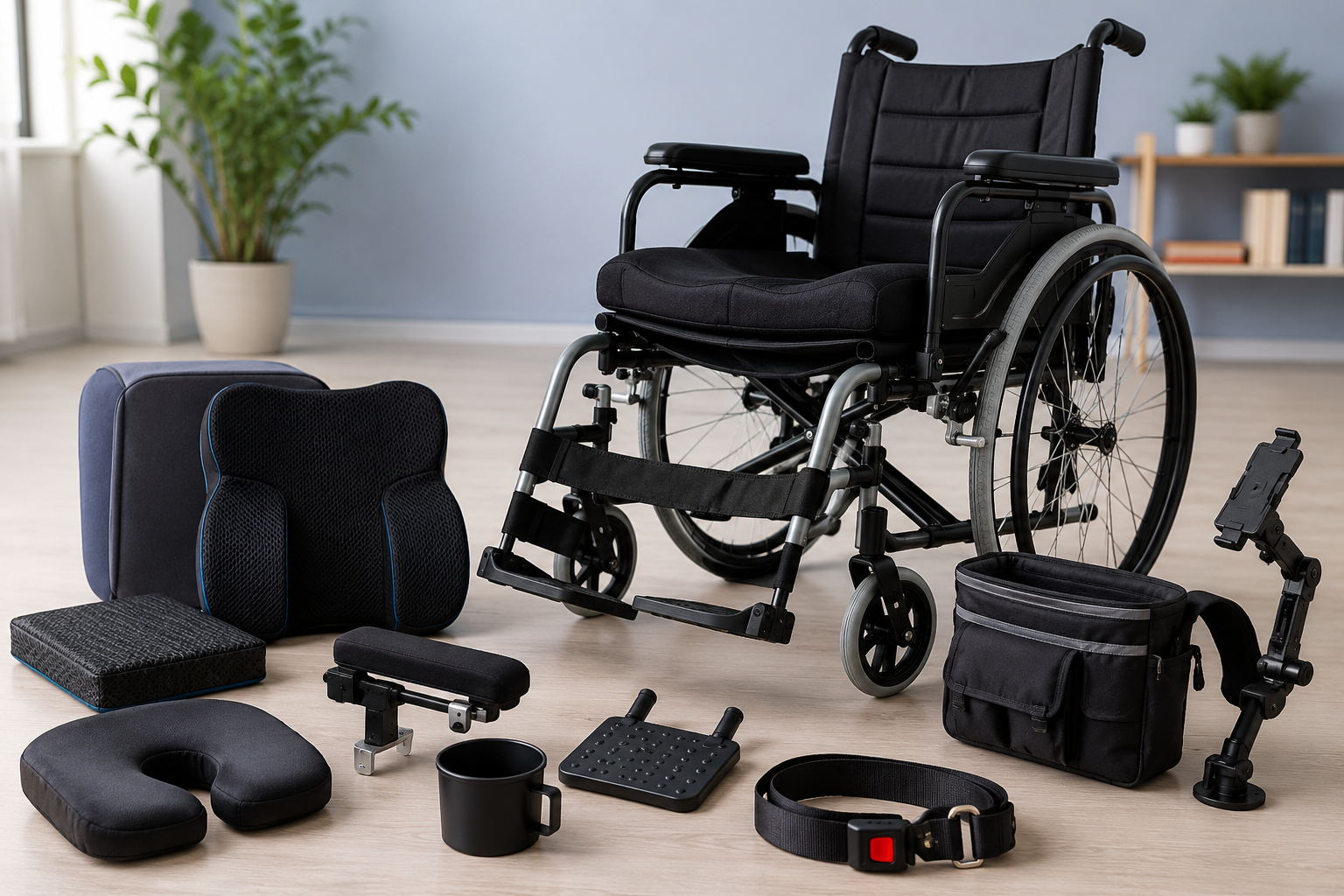
Choosing the right setup for a manual wheelchair is rarely a one-and-done decision. As daily routines, environments, and physical needs change, the accessories attached to a chair often matter just as much as the chair itself. The right additions can turn a functional chair into one that genuinely supports comfort, posture, independence, and confidence in day-to-day life.
This guide walks through the main categories of manual wheelchair accessories, what each one is designed to solve, and the factors worth thinking about before adding anything new to a chair. It's written as a starting point for research not a substitute for a proper assessment from an occupational therapist or mobility specialist, who can factor in an individual's specific body shape, condition, and goals.
Why Accessories Matter More Than People Expect
A manual wheelchair is a base platform. On its own, it gets a person from one place to another, but it doesn't automatically solve problems like pressure distribution, trunk support, carrying belongings, or protecting skin from friction and moisture. That's where accessories come in.
Research into wheelchair use consistently points to two issues that well-chosen accessories can help address: pressure injuries and postural strain. The Agency for Healthcare Research and Quality has noted that pressure injuries remain a significant and costly complication for wheelchair users, which is one reason seating accessories are treated as clinical equipment rather than optional add-ons in many care plans. Getting the fundamentals right support, positioning, and pressure relief tends to have a bigger day-to-day impact than most people expect going in.
Wheelchair Seating Accessories: The Foundation of Comfort
Seating is usually the first place to look when comfort or posture becomes an issue. A handful of core seating accessories cover most needs:
Cushions
Cushion choice affects pressure distribution, stability, and how tiring it is to sit for long periods. Common types include:
Foam cushions – lightweight and affordable, suited to users with lower pressure-injury risk
Gel cushions – help distribute weight more evenly and manage heat and moisture
Air-filled cushions – adjustable and often recommended for users at higher risk of skin breakdown
Hybrid cushions – combine materials to balance support with pressure relief
The "right" cushion depends on skin integrity, sitting tolerance, body shape, and how many hours a day the chair is used all things worth discussing with a clinician rather than guessing.
Backrests
A stock backrest doesn't always match a person's spinal curve or trunk stability needs. Contoured or adjustable backrests can improve posture, reduce fatigue, and in some cases reduce the risk of developing scoliosis-like postural patterns over time, particularly for younger users or those with limited trunk control.
Lateral and Postural Supports
Trunk supports, hip guides, and headrests help keep the body aligned, which matters both for comfort and for reducing the physical effort needed to stay upright. These are especially relevant for users with limited core strength or fluctuating muscle tone.
Pressure-Relief Additions
Beyond cushions, some users benefit from pressure-mapping assessments, which use sensors to visualise where weight concentrates on the seating surface. This data can guide more precise seating decisions than trial and error alone.
Wheelchair Mounts: Extending What the Chair Can Do
Mounts are one of the more versatile categories of manual wheelchair accessories, because they turn the chair into a platform for other equipment. Rather than holding a device or item in the lap or balancing it precariously, a mount secures it in a fixed, adjustable position.
Common uses for wheelchair mounts include:
Communication devices – securing speech-generating devices or tablets used for augmentative and alternative communication (AAC)
Phones and tablets – for navigation, entertainment, or staying connected
Cup holders and drink bottle holders – simple but genuinely useful for hydration on the go
Oxygen tanks or medical equipment holders – keeping essential equipment stable and within reach
Trays – for eating, writing, or working
One well-known example in this space is the Daessy mounting system, which is widely used for securing AAC devices and tablets to wheelchairs in a way that's adjustable, stable, and doesn't interfere with the chair's function. Mounts like this are particularly valuable for users who rely on a device for communication throughout the day, since a secure, correctly positioned mount can make the difference between a device being genuinely accessible and being awkward to reach.
When choosing a mount, it's worth considering:
Whether it needs to swing away for transfers or access
How much weight the mount can safely support
Whether it interferes with propulsion, folding, or transport
Compatibility with the specific device it's holding
Storage and Everyday Convenience Accessories
Not every accessory is about posture or medical need plenty simply make daily life easier:
Bags and pouches that attach to the frame or backrest for carrying personal items
Under-seat storage for bulkier belongings
Umbrella and cane holders
Grocery or shopping bag hooks
These smaller additions rarely get much attention, but for many users they solve genuine friction points, like not being able to carry a bag while pushing, or needing both hands free for propulsion.
Mobility and Handling Accessories
Some accessories are less about what's attached to the chair and more about how it moves:
Anti-Tip Devices
These small wheels or bars attached to the rear frame reduce the risk of the chair tipping backward, particularly useful on ramps or uneven surfaces, or for users learning to manage their chair independently.
Grip and Push Aids
Handrim covers, gloves, and ergonomic push aids can reduce strain on the hands and shoulders a genuine consideration given how common shoulder overuse injuries are among long-term manual wheelchair users, a pattern documented in rehabilitation research over the past two decades.
Power Add-Ons
For users who want the flexibility of a manual chair with occasional powered assistance, power add-on units can attach to convert a manual chair for specific situations, like longer distances or challenging terrain, without switching to a fully powered chair.
Wheel and Tyre Accessories
Puncture-resistant tyres, reflective wheel accents for visibility, and quick-release wheel mechanisms all fall into this category, each addressing a specific practical need.
Weather and Outdoor Accessories
Australian conditions bring their own considerations harsh sun, sudden rain, and long distances between shade. Accessories worth considering include:
Rain covers or ponchos designed to fit over the chair and user
Sun canopies or umbrellas with wheelchair-specific mounts
UV-protective seating covers to prevent surfaces from becoming too hot to sit on
How to Choose the Right Accessories
With so many manual wheelchair accessories available, it helps to work through a simple framework rather than buying reactively:
Identify the specific problem first. Is it discomfort, fatigue, difficulty carrying items, or something else? Naming the issue narrows the options quickly.
Prioritise anything related to skin integrity or posture. These have the most significant long-term health implications and are worth getting professionally assessed.
Check compatibility with the existing chair. Not all accessories fit all frame types, and incorrect installation can affect safety or chair function.
Consider funding pathways. In Australia, some wheelchair seating accessories and assistive technology may be eligible for funding through the NDIS, depending on individual circumstances and assessed need. Eligibility and funding categories vary, so it's worth confirming directly with an NDIS planner or support coordinator rather than assuming.
Trial before committing where possible. Especially for seating and pressure-relief products, a trial period can reveal issues that aren't obvious from a product description alone.
A Note on Safety and Professional Advice
It's tempting to treat wheelchair accessories the way you might treat accessories for any other product buy what looks useful and adjust as needed. But because seating, positioning, and mounted equipment can directly affect skin health, posture, and safe chair operation, it's worth involving a professional in the more significant decisions.
An occupational therapist or accredited mobility specialist can assess individual seating pressure, range of motion, and daily routines to recommend accessories suited to the person not just the chair. This is particularly relevant where NDIS funding is involved, as many funded items require documented clinical justification.
Final Thoughts
The right combination of wheelchair seating accessories, mounts, and everyday additions can noticeably improve comfort, independence, and quality of life for manual wheelchair users. There's no single "correct" setup what works well depends on the individual's body, routine, and environment, which is why professional input matters more here than it might for other kinds of equipment.
For anyone exploring mobility equipment Australia-wide, whether that's seating systems, mounting solutions, or general wheelchair accessories, it's worth speaking with a provider that can assess individual needs rather than offering a generic recommendation. Active Rehab has spent over 30 years working with adults and children on customised wheelchair and seating solutions, and can help point people toward the right assessment or starting point if they're unsure where to begin.