15-120 Minutes
Exploring the Meriwether Lewis Death and Burial Site
Natchez Trace Parkway
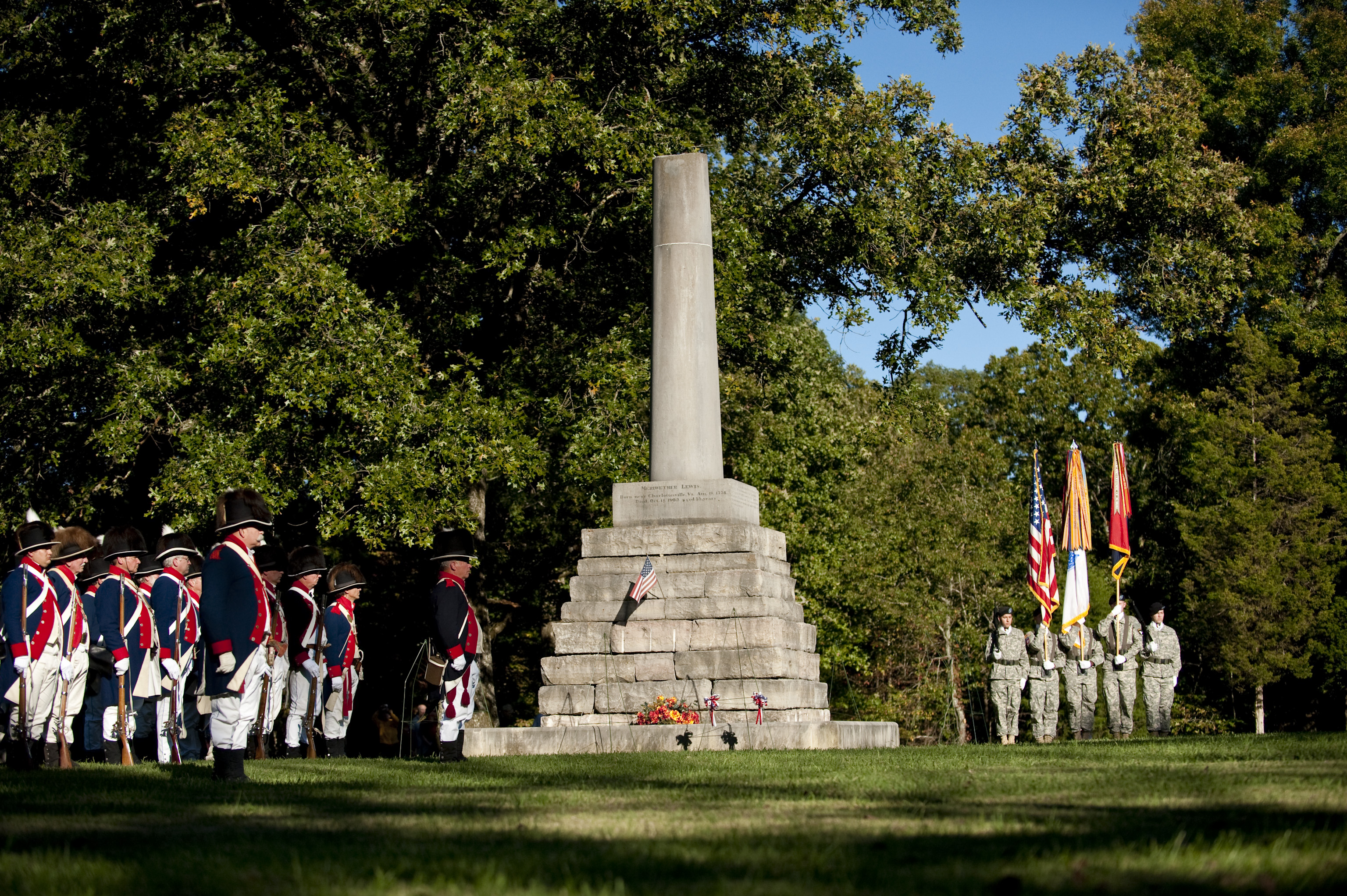
The Meriwether Lewis monument marks the final resting place of famed American explorer Meriwether Lewis who died by suicide near by at Grinder's Stand on October 11, 1809.
Why was Meriwether Lewis on the Natchez Trace? In September 1809, Meriwether Lewis was living in St. Louis as the appointed Governor of the Upper Louisiana Territory. He left St. Louis for Washington, DC, on September 4, 1809, to protest the War Department’s denial of payment vouchers that he had submitted for reimbursement. Lewis traveled with his personal servant, a free African American man named John Pernia (sometimes also spelled Pernier.) Lewis traveled to Fort Pickering (modern-day Memphis, Tennessee) by boat and intended to proceed down the Mississippi River to New Orleans and then travel by ship to Washington, DC. Rumors of war with Britain and the thought of his journals from the Corps of Discovery falling into their hands changed his mind. He decided to travel overland to the nation’s capital. Lewis left Fort Pickering on September 29th with John Pernia, Major James Neelly- the US Indian agent to the Chickasaw- and Neelly’s enslaved servant. Lewis arrived at Grinder’s Stand on the evening of October 10, 1809. He was accompanied by Pernia and Neelly’s enslaved servant. James Neelly remained farther south, looking for horses that had escaped the previous night. Lewis stayed in the cabin while Pernia and Neelly’s enslaved servant stayed in the stables. Mrs. Grinder and her children stayed in the kitchen separate from the house. In the middle of the night Mrs. Grinder heard two gun shots and found Lewis bleeding from his wounds. By sunrise on October 11,1809, Lewis was dead. Historical accounts support the probability of suicide. When Neelly arrived later in the day, he arranged to have Lewis buried a few hundred yards from Grinder’s Stand. Meriwether Lewis National Monument On February 6, 1925, President Calvin Coolidge used the Antiquities Act of 1906 to establish Meriwether Lewis National Monument. The War Department managed the monument and the superintendent of Shiloh National Military Park was put in charge of the monument site. From 1926-1933 the War Department made several improvements to the site, including replacing the deteriorating cemetery headstones and straightening and repointing the Lewis Monument’s stone. The War Department also marked the sections of old Natchez Trace that traveled through the site. The National Park Service era The national monument was transferred to the National Park Service in 1933, when Franklin D. Roosevelt reorganized the duties of the executive branch shortly after his inauguration. By the summer of 1933 a Civilian Conservation Corps (CCC) camp was established nearby to undertake erosion control, general cleanup, and nature trail development. The Natchez Trace Parkway assumed responsibility of the Meriwether Lewis National Monument in July 1939. With the construction of the Natchez Trace Parkway paralleling the monument, the site became an integral part of the Parkway. On August 10, 1961 the Meriwether Lewis National Monument was officially transferred to the Natchez Trace Parkway. See Exploring the Meriwether Lewis Site for additional information. Sites around the Meriwether Lewis Death and Burial Site are listed below: Exhibits and Park Information at the Visitor Information Center The cabin was built in 1935; it is not a reconstruction of Grinder’s Stand. No drawings of Grinder’s Stand are known to exisit. Today, one side of the cabin houses the park’s museum exhibits about the Corps of Discovery and Meriwether Lewis’ last days on the Natchez Trace. The visitor contact station is located on the other side where you can talk to a park ranger and pick up a park map. Visit the park’s website at www.nps.gov/natr or call 1-800-305-7417 for our seasonal hours of operation. Footsteps Through History Trail This easy, accessible, paved trail features exhibits on Natchez Trace travelers, including Meriwether Lewis, Chickasaw, and Kaintucks. Vehicle parking is available by the rest rooms closest to the Natchez Trace Parkway. Visitors can access the trailhead and hike a section of old Natchez Trace to follow in the last footsteps of Meriwether Lewis. The section of Old Trace is not paved. Lewis Monument and Pioneer Cemetery The Meriwether Lewis Monument was built in 1848 with funding provided by the Tennessee legislature. The legislation provided $500 “to preserve the place of internment, where the remains of General Meriwether Lewis were deposited.” The most noticeable feature of the monument is the broken shaft. This was done deliberately and was a common custom in the 1800s. The broken shaft represents a life cut short by an untimely death. The Pioneer Cemetery was first started in 1856, 47 years after Meriwether Lewis died and was buried. There are roughly 100 burials in the cemetery today. The War Department replaced the old and broken headstones with flat headstones in the 1920s. The flat headstones were restored in the early 2000s. Campground The campground at Meriwether Lewis has 32 sites. All sites are free and available on a first-come, first-served basis. They do not offer electricity, showers, or dump stations. Drinkable water and flush toilets are available on site. Camping is limited to 14 consecutive days in any one campground and 30 days total park-wide for a calendar year.
Tags
Self-Guided Tours - AutoBurial, Cemetery and GravesiteTradeExplorers and ExpeditionsMonuments and MemorialsTragic EventsWestward ExpansionMeriwether LewisLewis and Clark ExpeditionCorps of DiscoveryTennesseeveteransmilitaryNatchez Tracenatchez trace parkwayNatchez
Visitor Photos
No visitor photos yet
Details
Duration
15-120 Minutes
Duration Details
The visit is what you make of it. If you just drive around the site to see the Lewis Monument this activity will be reltaively short. However if you decide to walk our numerous trails and spend the night in the campground your visit can very easily last a long weekend.
Fees Apply
No
Seasons
Winter, Spring, Summer, Fall
Time of Day
Day, Night, Dawn, Dusk
Accessibility
Most of the exploring of the Meriwether Lewis site can be done by vehicle. There is an short accessible hiking trail that starts near the restrooms when you enter the site from the Natchez Trace Parkway. This trail is called the Footsteps through History Trail. This paved trail is about 4 feet wide and is flat and meets wheelchair accessibility. Along this trail are outdoor exhibits that focus on the history of the old Natchez Trace including American Indians, Kaintucks and Meriwether Lewis. The Visitor Information Center is wheelchair accessible. Inside the Visitor Information Center a park ranger or volunteer will be able to answer your questions about the site, Meriwether Lewis and the Natchez Trace Parkway. The museum exhibit room is also wheelchair accessible and displays the last days of Meriwether Lewis. You are able to drive to Meriwether Lewis's grave however the grave marker itself is about 20 yards from the parking area in a grassy area now known as the Pioneer Cemetery. The parking is gravel and there is an incline of roughly 5 feet from the parking area to the plateau of Lewis' grave and the rest of the pioneer cemetery.
Pets
Yes — Pets must be on a 6 foot leash at all times and be restrained. Please pick up after your pets and properly dispose of their waste.
Reservations
No
Age Info
People of all ages are fascinated by the life and legacy of Meriwether Lewis.
Location
Meriwether Lewis Death and Burial Site, milepost 385.9