1-3 Hours
Explore Bard Rock
Vanderbilt Mansion National Historic Site
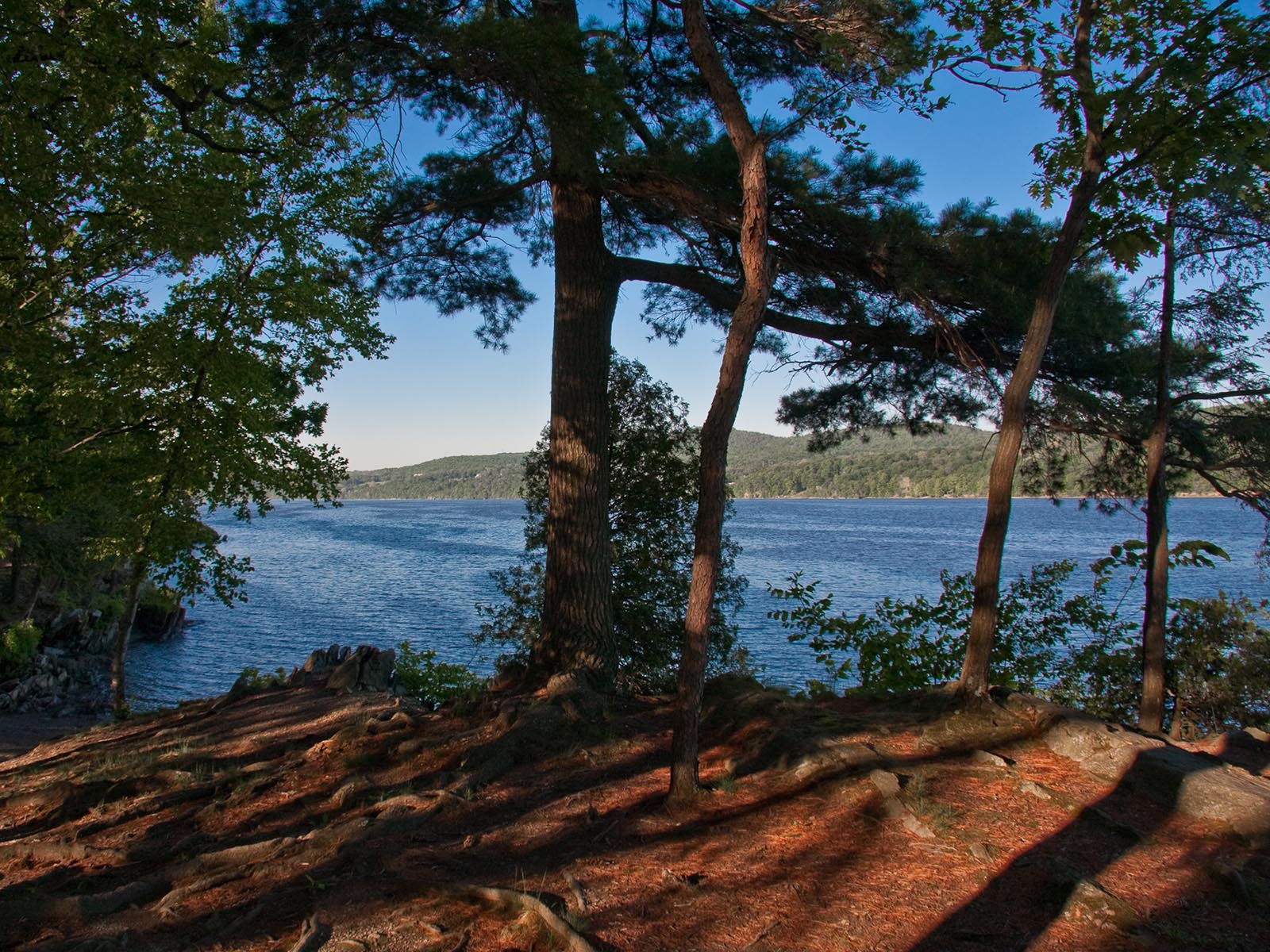
Bard Rock is a picnic area and one of the only places within the park that visitors can gain such proximity to the Hudson River. Historically, it was a river landing with “a large flat rock, which forms a natural wharf” capable of accommodating large sloops. From here, you can observe some of the natural features that make the Hudson River Valley a world famous destination.
Millions of years of dynamic geologic forces have stimulated human encounters with the Hudson River landscape. The mountains, valleys, ridges, and plateaus framing the Hudson River create one of the most spectacular landscape settings in the world. The natural beauty inspired a mid-19th century American art movement, known as the Hudson River School, a group of landscape painters whose work often depicts the Hudson River Valley and the surrounding area, including views from Hyde Park, and the Catskill Mountains, visible to the north of Bard Rock. The river has been known by many names. This area is claimed as the ancestral homeland of several Algonquin speaking tribes. Some indigenous people inhabiting this area called it Mahicannituck ("river that flows two ways”), relying on the river and its tributaries for transportation and fishing. The river supports a variety of fresh water fish, including striped bass, American eels, sturgeon, herring, and shad. Early Dutch explorers called it the North River. But it was later named after Henry Hudson, who explored the river in 1609 under the Dutch East India Company in his search for the Northwest Passage. The Hudson River formed the spine of the Dutch colony of New Netherland. Its strategic importance as the gateway to the American interior led to years of competition between the English and the Dutch over control of the river and colony. The Hudson River flows 315 miles from north to south primarily through eastern New York. The river originates in the Adirondack Mountains of Upstate New York and flows southward through the Hudson Valley to the Upper New York Bay between New York City and Jersey City. It eventually drains into the Atlantic Ocean at New York Harbor. The lower half of the river is a tidal estuary—tidal waters influence the Hudson's flow from as far north as the city of Troy. There are about two high tides and two low tides per day. The river is a central feature of The Hudson River Valley National Heritage Area, designated by Congress in 1996 and one of the now fifty-five federally-recognized National Heritage Areas throughout the United States. Today, Bard Rock is a picnic area and hiking destination and one of the only places within the park that visitors can gain such proximity to the Hudson River. Currently, Bard Rock is not accessble by car. It is located approximately a half-mile from the Pavilion Visitor Center, about a 20 to 25 minute walk with a partial uphill return. It is also a feature of Vanderbilt Riverfront Trail itinerary.
Tags
PicnickingNative American HeritageScenic ViewsTrailsHyde Park New YorkVanderbiltOutdoor activitiesHudson RiverHudson Valleyriverpicnic areahiking
Visitor Photos
No visitor photos yet
Details
Duration
1-3 Hours
Fees Apply
No
Seasons
Winter, Spring, Summer, Fall
Time of Day
Day
Pets
Yes
Reservations
No
Location
Bard Rock